
From Struggle to Strength: Finding Hope in Life’s Difficulties
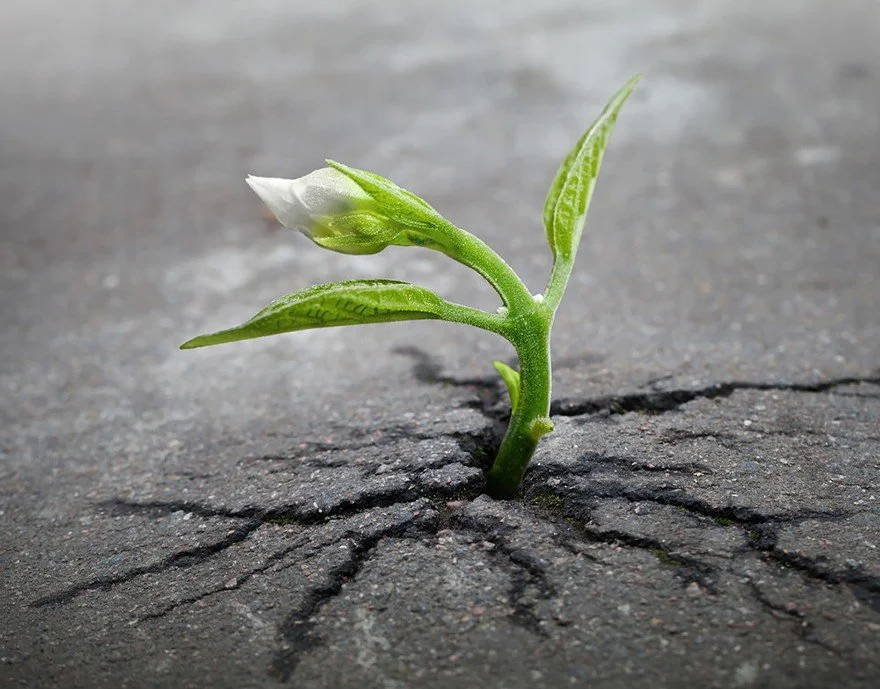
Last time, I discussed the challenges marriages were facing around me. As I pondered the topic for today, a quote came to mind:
“I don't know an easy path; I know avoidance isn't it.” – John Delony
Dr. Delony said this during a Ramsey show, and it stuck with me.
The truth is that, despite all of us embracing the “We can do hard things” mantra, we often don’t want to do the hard thing. There’s a part of us that wants to avoid it, or pray that some superhero will come out of the sky and save us from the hard thing in front of us.
I believe two things about hardship:
The first is that hardship is given to us specifically and with purpose.
I don’t believe our pain visits us by chance, nor is it random.
Think about the marriages I mentioned in the previous post. In each of the marriages, there was a problem, and one or both people didn’t want to change. They certainly wanted the other spouse to change, or they wanted circumstances to change, but they themselves wanted to stay the same, or perhaps didn’t believe they could change.
If we apply this desire to stay the same to financial hardship, people often want deliverance without having to change. They want someone (the government, a grandparent, or an unknown great-aunt with wealth, or just an unexpected windfall like the lottery) to save them from the pain of their situation and the pain of change.
But it is the pain of the situation that does the most work in changing our behavior.
An example of this is when I dug myself into a hole of credit card debt during the end of college and afterward. It was terribly painful to pull myself out of debt, and I had to make some painful decisions to avoid returning to credit card debt. Those lessons have stuck with me for the rest of my life.
The second thing I believe is that
Hardship and suffering not only change us but give us the opportunity to change for the better—to grow and thrive and to give us hope.
There’s a saying from the Bible:
"Not only that, but we rejoice in our sufferings, knowing that suffering produces endurance, and endurance produces character, and character produces hope." (Romans 5:3-4)
Having had my fair share of suffering and grief in my life and endured through it, I see that it produced character, so I can believe those things.
But how does it produce hope?
Hope is defined by Merriam-Webster as, “Desire, accompanied by expectation of or belief in fulfillment” or “To desire with expectation of obtainment or fulfillment.”
If we accept that painful circumstances, such as being deeply in debt, having financial woes, or struggling to pay the bills, can change us to grow and mature in our choices and behavior, then hope is the natural byproduct.
For, if you know that you’ve endured a hard thing, and you’ve come through the other side as a more mature and thriving person, then you’ll have hope and courage to face that challenge, knowing that you withstood the pain.
As with the physical world (think of exercising or working out), when we push ourselves a little further and harder than we would like, we are often left in a bit of pain. Yet, as we repeat these practices, we become stronger—and hope follows. We’ve done it before; we can do it again.
I’ll finish with this: The only way we can truly believe that we can do it again is by believing in the power of God to direct those painful circumstances our way, for our good. Because if there is no good and powerful God, then to believe that hardship is purposefully given is to believe a farce.
So, yes, believe these two principles, and I believe them wholeheartedly. I believe them because I’ve seen them play out in my own life and in the lives of countless others.
Do you need some hope? Someone to encourage you in these areas of hardship? Contact me for a free consultation.
